
Everything You Need to
Know About Prenatal Vitamins
Published on January 21, 2026
Updated on November 5, 2026
Written by Kathleen Morrison
Medically Reviewed by Andrea Sleeth, WHNP-BC, MSCP, a healthcare provider affiliated with Wisp
Key takeaways
- Prenatal vitamins are formulated around pregnancy needs, not male fertility, so there’s no clear reason for most men to take them.
- Zinc, selenium, and CoQ10 are among the nutrients studied for male fertility, and prenatal vitamins may not include them.
- Prenatals can contain iron above what most adult men need, and excess iron may cause side effects.
- High doses of preformed vitamin A found in some prenatal vitamins may also cause side effects with long-term overuse.
- You can buy prenatal vitamins and most men’s fertility supplements at pretty much any drugstore, but supplements aren’t FDA-approved before they’re sold, so doses can vary widely.
- At-home testing may help you and your partner track fertility markers before you pick a supplement.
Your partner’s prenatal bottle is sitting right there on the counter, and you’re wondering if you should just... take a prenatal vitamin too. Solidarity! We love that.
Short answer: Men can take prenatal vitamins, but for most men, there’s no clear benefit. An occasional one is unlikely to cause harm, but it isn’t doing much for you either.
But prenatals are built for pregnancy. Meanwhile, the nutrients that often pop up in male fertility discussions (like zinc, selenium, and CoQ10) may not be in a prenatal at all, or not in the amounts studied.
Before you start taking prenatal vitamins, it may help to start with some at-home testing. An at-home fertility test kit for couples lets you and your partner collect samples and track markers from home, together.
Here’s what to know about prenatal vitamins for men, what’s actually worth looking for, and when to skip the borrowing.
Quick Note: When we say “men” here, we mean cisgender men (people assigned male at birth). If you’re a trans man or were assigned female at birth, your nutrient needs may look different, so it’s worth talking them through with an in-person provider.
Insufficient sample collection may result in a false negative or inconclusive results. This test does not replace in-person care. Our screening kits are to help you gain a better perspective on your health and how your body functions. You may use this information to make more informed health care decisions and choices. Patients should follow their provider's recommended screening schedule based on their personal health history for appropriate follow-up and comprehensive care.
What’s actually in a prenatal (and who it’s for)
Prenatal vitamins are designed around one job: supporting a healthy pregnancy. That’s why they can contain folic acid, which the CDC recommends for anyone who could become pregnant because it can help support healthy neural tube development, plus iron and calcium.
Men and women have different nutritional needs, though. Adult men need less iron than pregnant women, and neural tube development isn’t something your body is working on.
So while a prenatal supplement isn’t likely to hurt you, it isn’t matched to what men’s bodies need.
Are prenatal vitamins good for men who are trying to conceive?
If you’re trying to conceive, the real goal isn’t "take a daily vitamin." It’s getting the nutrients researchers have studied to support male fertility.
Some supplements, including selenium, zinc, omega-3 fatty acids, and CoQ10, may help support with certain sperm health parameters, as supported by certain research, though evidence is mixed.
Here’s how the key nutrients shake out:
Zinc
Zinc supplementation may help support sperm concentration and motility (aka your sperm’s ability to swim).
At the same time, in a large trial of men whose partners were undergoing infertility treatment, folic acid plus zinc didn’t improve semen quality or live birth rates.
So zinc may help support sperm health for some men, but it’s not a guaranteed fix. Just don’t go overboard: adult men need about 11 mg a day, and taking more than 40 mg a day over time can lower copper levels.
Folate and folic acid
Folate is the nutrient prenatals are famous for. Your body needs folate to make DNA, which is why it comes up in sperm conversations. However, there’s no consistent evidence that folic acid supplementation can help support male fertility.
CoQ10
CoQ10 is an antioxidant your body makes on its own. CoQ10 supplementation may be associated with improvements in sperm concentration and total motility.
If CoQ10 is on your wish list, check the label, since women’s prenatals may not include it.
Selenium
Selenium is another nutrient that may help support sperm concentration and motility. For reference, the upper limit for selenium is 400 mcg a day for adults.
The takeaway? Some supplements may help support sperm parameters for some men, but no pill can help boost fertility on command. Nutrition is one piece of the puzzle, not a quick fix.
Can men take prenatal vitamins for hair growth?
Ah, the thicker hair question. Some men wonder whether prenatal vitamins help with hair growth. Sadly, it’s not a secret shampoo in pill form.
There’s little scientific evidence that prenatal vitamins can help support hair growth in people who aren’t deficient.
If hair growth and overall scalp health are the real goal, an in-person provider can talk through options.
Can men take women’s prenatal vitamins, or are there prenatal vitamins for men?
Can men take women’s prenatal vitamins? Technically, yes. But "not harmful" and "useful for your goals" aren’t the same thing.
Women taking prenatals during pregnancy need that extra iron, and you may not.
A better starting point than borrowing (or buying a “men’s version”) is a conversation with an in-person provider about whether you’re actually low on anything. Lab work and other applicable testing can help show where you stand, and an in-person provider can help you decide which supplements, if any, may be appropriate for you.
Whatever you choose, run it by an in-person provider, especially if you already take other dietary supplements or medications.
Is it safe for men to take prenatal vitamins every day?
Generally, yes, but there’s no clear benefit to men taking prenatals. Plus, taking them every day for months can add up. Two nutrients deserve a closer look:
Iron
Prenatal formulas can have more iron than usual, which lines up with what pregnant people need. The recommended amount of iron for adult men is 8 mg a day, and the upper limit for adults is 45 mg from all sources combined. Most men don’t need extra iron from vitamin supplementation.
Also, iron supplementation can lead to common side effects like:
- Upset stomach
- Constipation
- Nausea
- Abdominal pain
Excess iron can lead to serious problems over time, especially in men with hereditary hemochromatosis, a condition where iron can build up to toxic levels.
If that runs in your family, check with an in-person provider before you take vitamins that contain iron.
This is not a complete list of risks and side effects, and others may occur. If symptoms worsen or you notice signs of an allergic reaction, contact a provider right away.
You are encouraged to report negative side effects of prescription drugs to the FDA. Visit www.fda.gov/medwatch or call 1-800-FDA-1088.
Vitamin A
Adult men need about 900 mcg of vitamin A a day, with an upper limit of 3,000 mcg for preformed vitamin A (retinol).
Beta-carotene, another form of vitamin A, doesn’t have an upper limit. Flip the bottle over and check which one you’ve got.
Too much preformed vitamin A can cause side effects like:
- Bone or joint pain
- Convulsions (seizures)
- Drying or cracking of skin or lips
- Dry mouth
- Fever
- Headaches
- Double vision
This is not a complete list of risks and side effects, and others may occur. If symptoms worsen or you notice signs of an allergic reaction, contact a provider right away.
You are encouraged to report negative side effects of prescription drugs to the FDA. Visit www.fda.gov/medwatch or call 1-800-FDA-1088.
Your fertility journey is a team sport
So, is it OK for men to take prenatal vitamins? An occasional one is unlikely to cause harm, but there’s no clear benefit, either. Prenatals aren’t designed around male fertility or other goals you’re working toward (think hair growth), so talking with an in-person provider about your actual nutrient needs is a better use of your time.
Whether you start trying to conceive next month or next year, skip the guesswork. The Wisp Hers & His Advanced Fertility Kit lets you both collect samples at home, with a sperm test for him and hormone tests for her that may help track fertility markers, delivered discreetly.
And for the partner who’s actually growing the baby, Wisp Prenatal Vitamins may help support your partner’s nutritional needs before, during, and after pregnancy. You bring the snacks.
These statements have not been evaluated by the Food and Drug Administration. This product is not intended to diagnose, treat, cure, or prevent any disease. Individual results may vary.
This blog post is for informational and educational purposes only and should not be taken as professional advice. Always consult with a qualified professional before making any decisions based on the information provided here.
Trusted Treatments
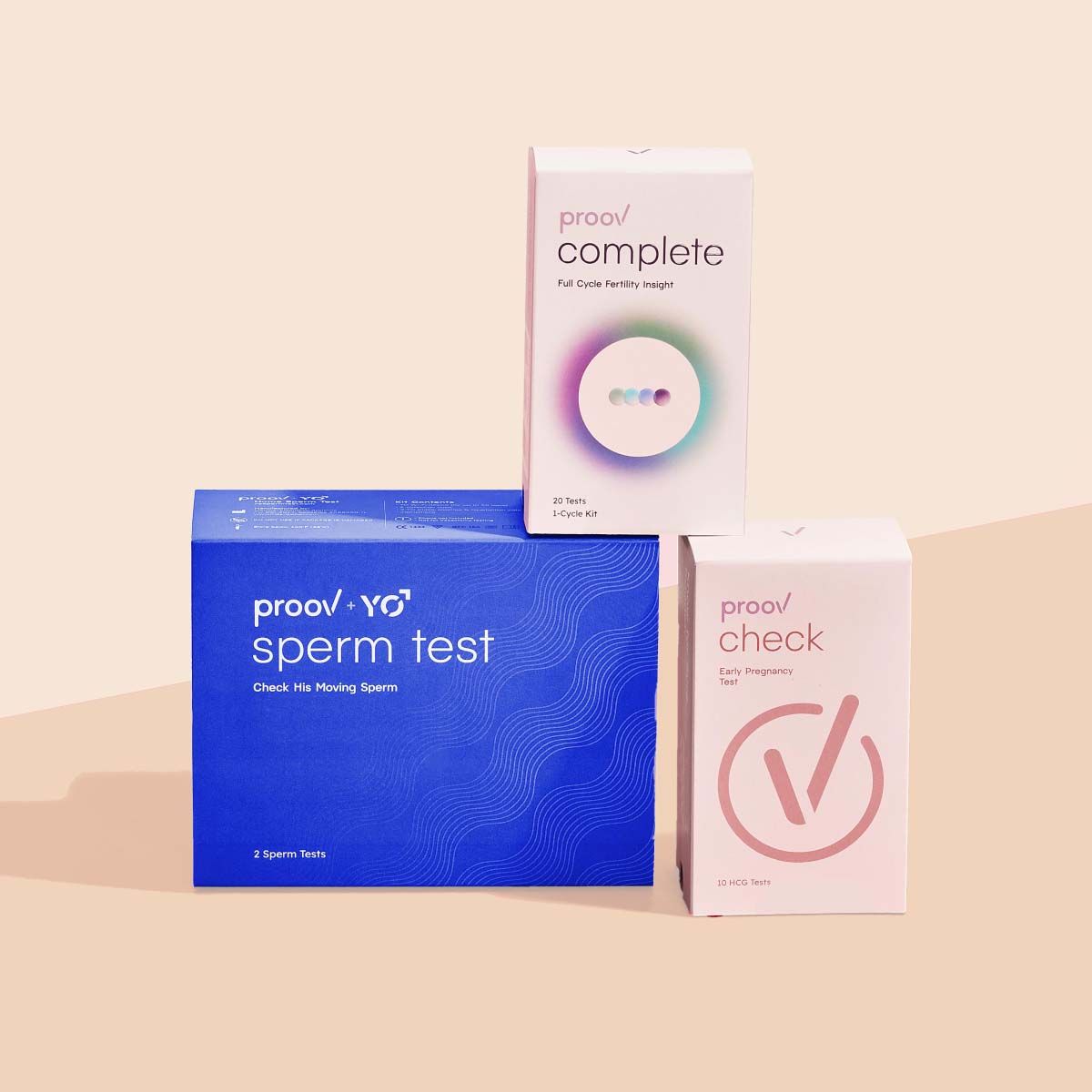
Hers & His Advanced Fertility Kit by Proov
$169.99
The only all-in-one fertility test kit for couples that covers both male and female testing

Wisp Prenatal Vitamins
Starting at $14
Prepare for & support a healthy pregnancy with essential nutrients for you and baby.


