Written by Kathleen Morrison
Medically Reviewed by Andrea Sleeth WHNP-BC, MSCP, a healthcare provider affiliated with Wisp
Key takeaways
- Alcohol and fertility are related, but the science is messier than "alcohol causes infertility;” research on moderate drinking in women and the ability to conceive is mixed.
- Higher levels of alcohol consumption are more consistently associated with less favorable reproductive measures in women and men. Keep in mind, though, associations are not proof of cause.
- Drinking has been associated with poorer sperm quality, while evidence that moderate alcohol intake reduces a couple's chance of conceiving is limited.
- No fertility-specific "safe" threshold exists, which is part of why U.S. health authorities recommend avoiding alcohol when trying to become pregnant.
- During pregnancy, the advice is completely clear: there is no safe amount of alcohol, no safe time to drink, and no safe type of alcohol.
Somewhere between the engagement party and the second round of ovulation strips, alcohol stops being a normal Friday and becomes a moral referendum.
One friend swears she got pregnant the month she quit drinking. The internet offers a blog saying it's fine and another headline saying it's not.
So, does alcohol affect fertility? It can, though how much you drink appears to matter far more than whether you drink at all. The evidence that a moderate amount of alcohol directly lowers your ability to conceive is mixed. On the other hand, higher levels of alcohol consumption are where research gets more consistently concerning for women and men both.
Which means the useful question isn't "was it the wine?" It's "where am I at, right now?" That one you can answer. At-home fertility testing can help give you and your partner a clearer picture of reproductive health, whether that's tracking ovulation and key hormone patterns for women or assessing sperm health for men.
Now, let's break down what "fertility" actually means, what counts as a drink (this trips up almost everyone), what research shows at each level of drinking, and where the line between trying to conceive and pregnancy gets firm.
These statements have not been evaluated by the Food and Drug Administration. This product is not intended to diagnose, treat, cure, or prevent any disease. Individual results may vary.
What "fertility" actually means (and why it changes the answer)
"Fertility" gets used as one word for a stack of different things, which is exactly how a modest study finding becomes an alarming headline.
It can mean:
- whether you ovulate, and how regularly
- sperm production and sperm quality
- fecundability — the chance of conceiving in a given cycle
- whether a pregnancy is confirmed and continues
- how things go with treatments like IUI or IVF
These aren't interchangeable, and neither is the evidence behind them. A study can find alcohol associated with a lower sperm count without showing alcohol causes infertility.
Another can find no clear link between moderate alcohol consumption and time to conception without proving alcohol has no effect at all.
How much is too much? What actually counts as a drink
Before any research means anything, you need the unit it's measured in because studies count in standard drinks and almost nobody pours in standard drinks.
If your "one glass" is really two, every recommendation you read is quietly off by half.
The NIAAA defines one standard drink as about 12 oz of beer, 5 oz of wine, or 1.5 oz of spirits. A hazy IPA at double strength is closer to two.
Roughly, here's how the levels break down:
- Moderate drinking: the CDC describes moderate alcohol use as one drink or less a day for women and two or less a day for men. That’s a general definition, not a fertility clearance.
- Heavy drinking: the NIAAA defines this as four or more drinks on any day or eight or more a week for women, and five or more on any day or 15 or more a week for men.
- Binge drinking: roughly four or more drinks for women, or five or more for men, in about two hours.
These are genuinely different exposures, and findings from one shouldn't be stretched to cover another.
Does alcohol affect fertility in women?
Alcohol can interact with the hormone system that runs your cycle, but the leap from "interacts with" to "stops pregnancy from happening" isn't one the research supports at typical drinking levels.
The American Society for Reproductive Medicine notes that the effect of alcohol on female fertility hasn't been clearly established: heavier consumption is best avoided when attempting pregnancy, while evidence on moderate consumption is limited.
One study found little association with fertility at low-to-moderate weekly intake, while a larger review found an association with reduced fecundability at higher amounts.
The point is that heavier drinking is the part worth acting on, and a glass here and there typically shouldn't be the villain in your story.
That said, because pregnancy can begin before it's recognized, U.S. health authorities still recommend avoiding alcohol once you start trying.
What about ovulation and your menstrual cycle?
If you've ever been told that drinking will throw off your cycle, you're in good company.
It's one of the most repeated assumptions about alcohol and fertility, and it usually arrives with the confidence of settled fact.
The logic isn't unreasonable, either: alcohol can interact with the hormone system that runs your cycle, so it may feel like ovulation should be the first thing to go.
The research is less dramatic than the assumption. In a study following more than 18,000 women, alcohol intake wasn't associated with ovulatory-disorder infertility.
Another study that tracked women across their cycles did pick up some shifts in reproductive hormones, but without clear evidence that ovulation itself was disrupted.
Where something did show up, it had more to do with timing than total volume; one group of researchers found heavier drinking in the second half of the cycle and around ovulation was associated with a lower chance of conceiving that month.
Put simply, ovulation looks fairly sturdy, and the smaller signals show up in the surrounding cycle rather than in whether you ovulate at all.
Does alcohol affect male fertility?
Certain research done on young men associated increasing habitual alcohol consumption with lower sperm concentration, total count, and normal shape, clearest at high weekly intake.
A much larger study found moderate alcohol consumption wasn't adversely associated with sperm quality.
Practical read: Cutting back on alcohol, especially heavy or binge drinking, is sensible while trying for a baby (minus the guilt spiral).
What research says at each level of drinking
Moderate drinking
This is where the evidence is genuinely inconsistent, and anyone who tells you otherwise is picking a side.
A large study of women trying to conceive found little evidence of a reduced chance of conceiving at low-to-moderate weekly intake, with signals appearing only at higher weekly amounts.
But a review pooling nearly 99,000 women found an association with reduced fecundability, and another study found that moderate drinking in the second half of the cycle was associated with lower fecundability.
For men, the overall picture leans a little more reassuring. Research in large groups of healthy men hasn't consistently linked moderate alcohol consumption to poorer sperm quality.
Translation: nobody can promise a glass of wine is harmless, and nobody can tell you it's why you're not pregnant. That’s why the recommendation is to avoid alcohol once you start trying, rather than to hunt for a safe number.
Heavy drinking
The signal gets clearer here. Higher weekly intake has been associated with lower sperm concentration, count, and normal shape in young men, and with reduced fecundability in women at the highest levels.
This is where "cutting back" stops being a vibe and becomes a concrete step.
Binge drinking
Less studied than you'd hope. Some research on women in fertility treatment found low-to-moderate consumption and binge drinking weren't associated with clinical pregnancy or live birth. One population, one outcome, not a green light.
Since binge drinking packs a lot of alcohol into a short window, count it separately rather than averaging it into your week.
Alcohol before pregnancy vs. during pregnancy
These are two separate questions, and blending them is how people end up terrified for no good reason. Once pregnancy is possible or confirmed, the question becomes exposure, not conception, and here the message is unequivocal.
Alcohol use during pregnancy is associated with increased risks including miscarriage, preterm birth, and fetal alcohol spectrum disorders, and there's no known safe amount, time, or type.
Drank before you knew? ACOG notes that serious harm from a small amount of alcohol consumed before someone knew they were pregnant is unlikely.
The meaningful action is to stop drinking once pregnancy is recognized and bring any concerns to a provider; not to re-litigate a Tuesday from three weeks ago.
Where this leaves you
Does alcohol affect fertility? It can, and research points most consistently at higher levels, much less clearly at lower ones.
That said, because pregnancy can begin before it's recognized, U.S. health authorities recommend avoiding alcohol entirely once you start trying. Cutting down is a low-cost step in that direction, not a substitute for it.
What's harder to admit is that the drinking question is often a stand-in for a bigger one. When a month goes by and nothing happens, alcohol is the variable you can name, so it becomes the thing you replay, adjust, and quietly blame.
Meanwhile, the questions that would actually move you forward go unanswered, because they're harder to ask and feel like a bigger deal to look into.
They don't have to be. Whether she's ovulating and when, and what his sperm test looks like; those are the two halves of the picture, and you can start checking both from home rather than from a search bar.
That's the whole idea behind the Wisp Fertility Starter Kit: her cycle and his sperm test in one box, so you can move from guesswork to information about the two of you.
If you're looking to understand your reproductive health beyond the question of alcohol and fertility, getting a clearer picture of your hormone levels with the Wisp’s Female Hormone Health Panel can be another place to start.
Stop guessing and start understanding your body!
This blog post is for informational and educational purposes only and should not be taken as professional advice. Always consult with a qualified professional before making any decisions based on the information provided here.
Fertility Support
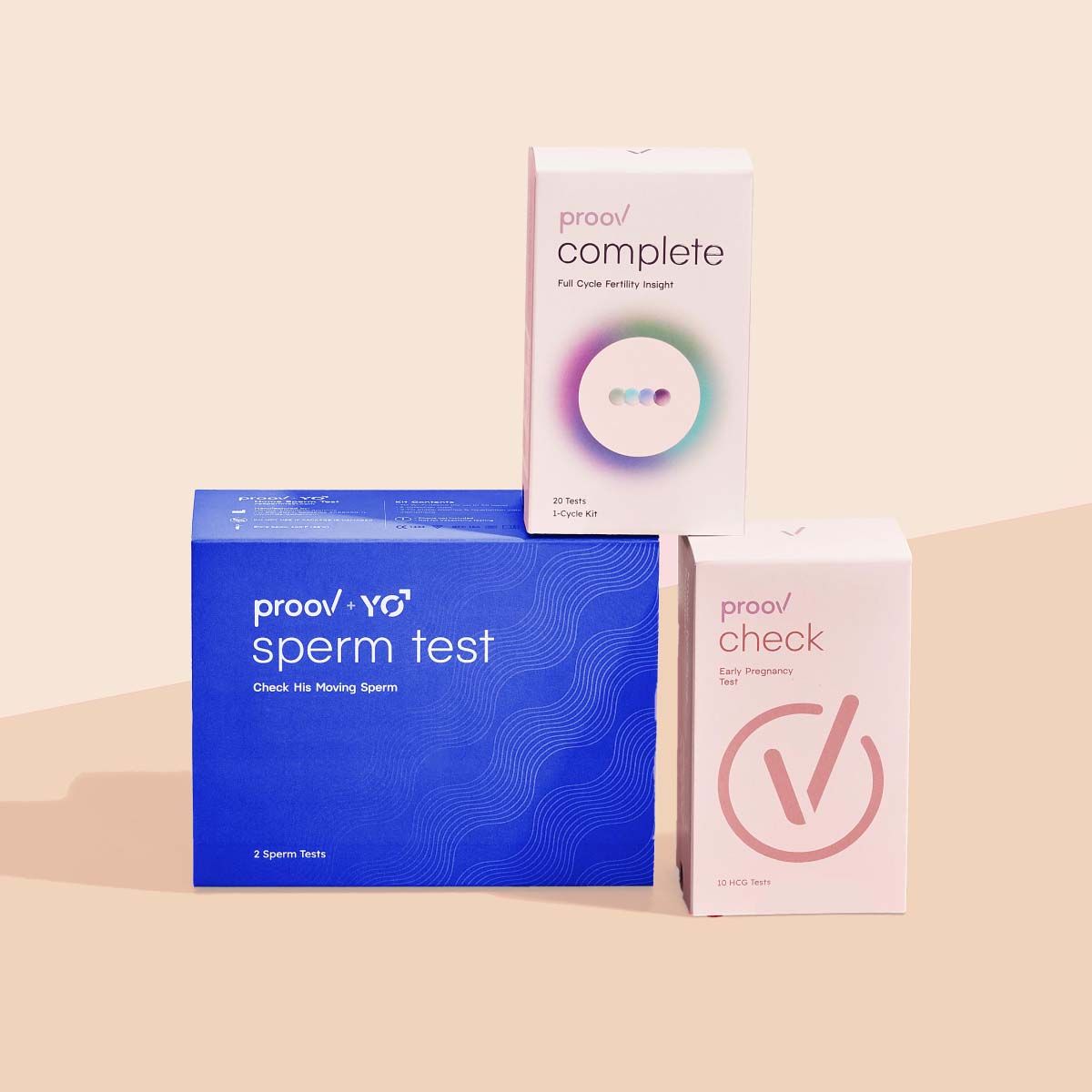
Hers & His Advanced Fertility Kit by Proov
$169.99
The only all-in-one fertility test kit for couples that covers both male and female testing
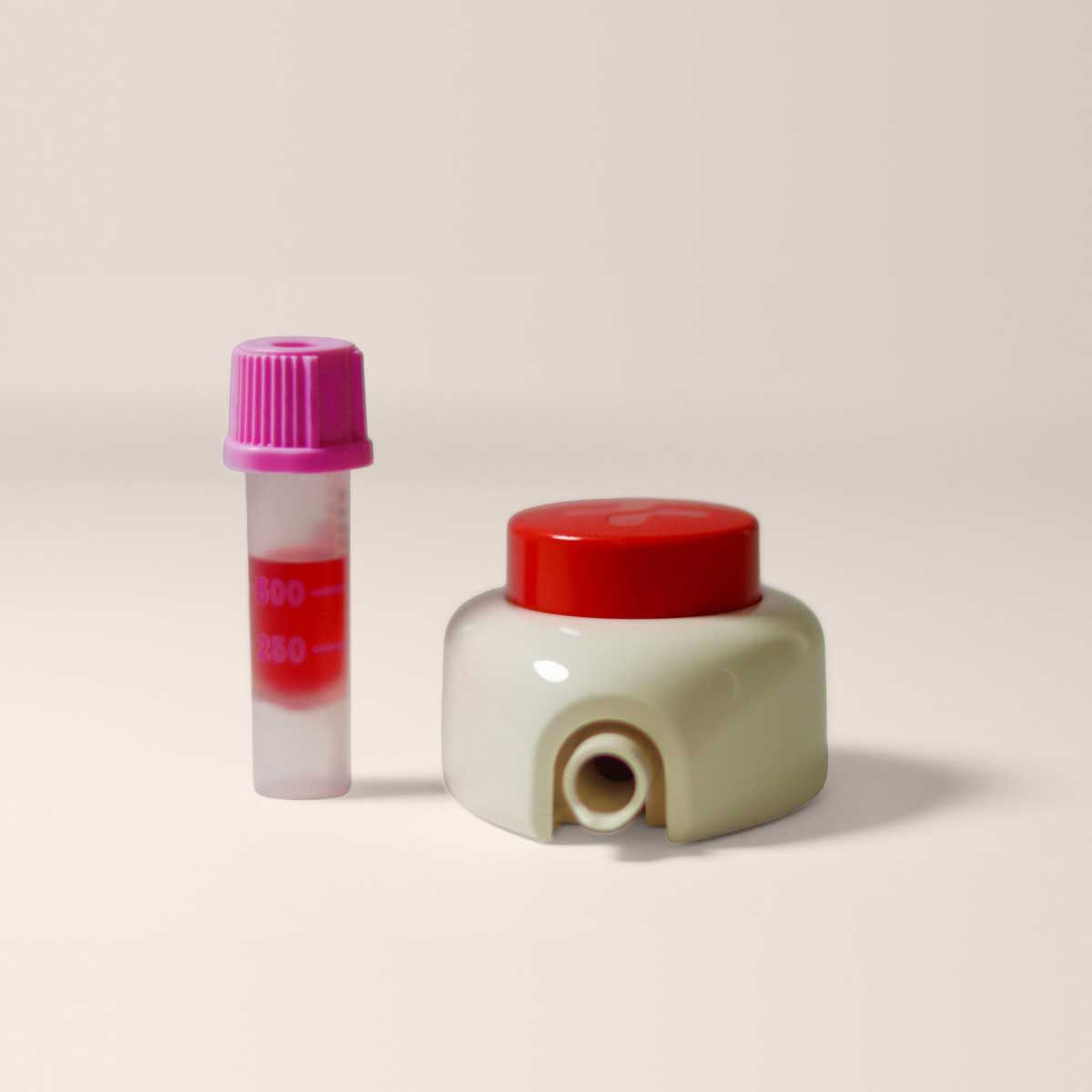
Wisp Female Hormone Health Panel
Starting at $229
At-home blood testing panel that covers 6 key hormonal health markers.