At Home Fertility Test:
What It Checks, Accuracy & What to Expect
Published on September 14, 2026
Written by Kathleen Morrison
Medically Reviewed by Dr. Shannon Chatham, DO: a healthcare provider affiliated with Wisp
Key takeaways
- An at-home test lets you collect your own sample to measure specific hormone levels or sperm markers, helping you track baseline health indicators over time.
- At-home test kits are available for both partners, helping you both track individual hormone levels or sperm markers from home.
- At-home kits track key markers like FSH, LH, estrogen, and PdG to help you estimate your fertile window and monitor hormone trends related to ovulation.
- At-home kits for men typically measure key sperm markers, such as count and motility, from a sample you collect yourself.
- No at-home test can diagnose infertility. Results are conversation starters for an in-person provider, not conclusions.
- Persistent irregular cycles, abnormal at-home test results, or months of trying without success are all good reasons to see an in-person provider.
You've been told to "just relax." You've been told, "You have plenty of time." And maybe you've been told to come back in a year, and then we'll talk. Cool. Super helpful.
Here's the thing: wanting information about fertility before anything is "wrong" is not being dramatic. It's being informed. And you shouldn't have to book a clinic appointment, take a day off, and sit in a paper gown just to get a starting point.
That's the whole appeal of at-home fertility test kits. You collect a sample on your couch, read a strip, and get real data about your hormone levels.
Let's break down what at-home fertility tests typically check, what they can't tell you, and how to choose a test that answers your question.
These statements have not been evaluated by the Food and Drug Administration. This product is not intended to diagnose, treat, cure, or prevent any disease. Individual results may vary.
How do at-home fertility test kits check your fertility?
At-home fertility kits look for specific signals your body is already producing, using whatever sample is easiest to collect at home. The medium just depends on what's being measured:
- Urine tests: The most common format by far. You dip a strip or pee on it, depending on the instructions, and read the result in minutes, sometimes through a companion app that logs your readings across the cycle. This is how many ovulation predictor kits, at-home FSH tests, and multi-hormone strip kits work.
- At-home sperm tests: You collect a semen sample and run it through a small reader that pairs with an app. It measures sperm count and, in some kits, motility, so you get a number.
Some at-home fertility kits sold by other testing services also include a finger-prick blood test. Those work a little differently: you prick your finger, place a few drops of blood on a collection card, and mail it to a certified lab.
Whichever format you use, none of these replace a full fertility evaluation. They're a first look, and a genuinely useful one.
*Wisp's at-home fertility testing kits do not include finger-prick blood tests or mail-in lab analysis. Wisp's fertility testing options use at-home urine tests and a device-based sperm test that you read yourself. If you're seeking blood-based hormone testing, an in-person provider is the best next step.
At-home female fertility test: What's tracked
An at-home fertility test for females usually centers on four hormone markers across your menstrual cycle:
FSH (follicle-stimulating hormone):
Follicle-stimulating hormone is what nudges your ovaries to develop eggs each cycle.
Consistently elevated FSH might suggest your ovaries are working harder than expected, which in-person providers sometimes use as a rough signal about ovarian reserve.
LH (luteinizing hormone):
Ovulation predictor kits detect the surge of luteinizing hormone that shows up roughly 24 to 36 hours before an egg is released.
That surge is your heads-up that your fertile window is open, which makes ovulation tests a go-to for anyone trying to conceive.
Estrogen (E1G):
Estrogen rises before ovulation as a follicle matures, so an estrogen marker can help widen your fertile window from "two days" to something more like five or six.
Practically, that would mean fewer weeks spent wondering if you missed it entirely.
PdG (a progesterone marker):
Measured after ovulation to confirm that ovulation actually happened and that your luteal phase held steady.
Female fertility markers at-home test kits don't typically test for
Some fertility hormones and factors simply aren't available in a strip. An in-person provider, such as a fertility doctor or fertility center, can help assess:
- AMH (anti-Müllerian hormone)
- Prolactin
- Thyroid hormones
- Testosterone and other androgens
- Ovary and uterine structure, via imaging
These typically require a blood draw or in-office exam rather than a home kit.
At-home male fertility test: What's tracked
Male fertility gets skipped constantly, which makes no sense when male factor issues are a common contributor to couples struggling to conceive.
Tests for people assigned male at birth are also refreshingly simple, and a device-based kind (sample plus a reader, often paired with an app) can help you get insights without having to mail anything.
Sperm count:
These tests detect whether sperm concentration clears a reference threshold. Fast, private, and a reasonable first question to answer.
Motility assessment:
Good at-home fertility testing kits don't just count sperm; they measure moving sperm, sometimes reported as motile sperm concentration, because a great sperm count with poor movement can still make conception harder.
If an at-home sperm count or motility result comes back low, that's a nudge to consult an in-person provider, not a verdict.
What at-home semen analysis tests usually don't cover
A couple of male reproductive health trackers still require an in-person clinic visit:
- Morphology: Sperm shape can't be assessed at home; it needs microscopic review by a trained technician.
- DNA fragmentation and other specialized markers: These require a full clinical semen analysis.
How accurate are at-home fertility tests compared to in-person clinic testing?
Fair question, and the answer has nuance.
The accuracy of at-home fertility tests depends on both the technology and proper use: timing, hydration, and whether you actually read the instructions or vibed your way through it.
A urine hormone test taken on the wrong cycle day can be accurate in measurement and completely useless.
Besides these, there are a few limitations worth knowing if you're planning to test your fertility from the comfort of your home:
- Snapshots, not stories. One reading captures one moment. Tracking across a full cycle gives you far more than a single data point.
- Thresholds, not numbers. Many strip tests flag "above/below a cutoff" rather than a precise hormone level.
- Timing changes everything: FSH and LH shift across your cycle. Testing on the wrong day can produce a misleading test result.
- Scope: Home kits can't evaluate morphology, DNA fragmentation, tubal health, or uterine anatomy.
- Screening, not diagnosis. At-home fertility tests may flag something worth investigating, but only an in-person provider can diagnose infertility.
None of that makes home testing pointless. It makes it a first step. Think of home pregnancy tests: nobody argues those aren't useful, and nobody skips the in-person OB either.
How to choose the best at-home fertility test for YOU?
The best at-home fertility test is the one matched to your question. So, start with what you're trying to learn, not with the flashiest box:
- Timing ovulation? A simple ovulation predictor kit can do the job.
- Want to confirm ovulation happened? Look for a kit that includes PdG testing after your fertile window.
- Curious about ovarian reserve? Choose a test that includes FSH, and expect to discuss results with a provider. That said, AMH has largely replaced FSH as the go-to ovarian reserve marker, so an at-home kit that tests AMH may give you a clearer picture.
- Checking sperm health? An at-home sperm test covering count and motility can be the fastest starting point.
- Testing as a couple? A couple's fertility test kit covers both partners in one go.
Your next step, on your terms
At-home fertility testing can help give you a clearer picture of what’s happening before you take things forward. From tracking hormones and ovulation to checking sperm health and confirming a pregnancy, these tests can help turn some of the uncertainty around fertility into information you can actually use.
But knowing where you stand doesn't require an in-person waiting room. Wisp offers at-home fertility testing for both partners, including multi-hormone and FSH testing for her, a sperm test for him, and pregnancy tests to confirm the good news when it lands.
Your fertility isn't a mystery you have to solve alone. It’s information you can start gathering on your own terms. Wisp is here to help make that first step a little simpler.
This blog post is for informational and educational purposes only and should not be taken as professional advice. Always consult with a qualified professional before making any decisions based on the information provided here.
Fertility Support
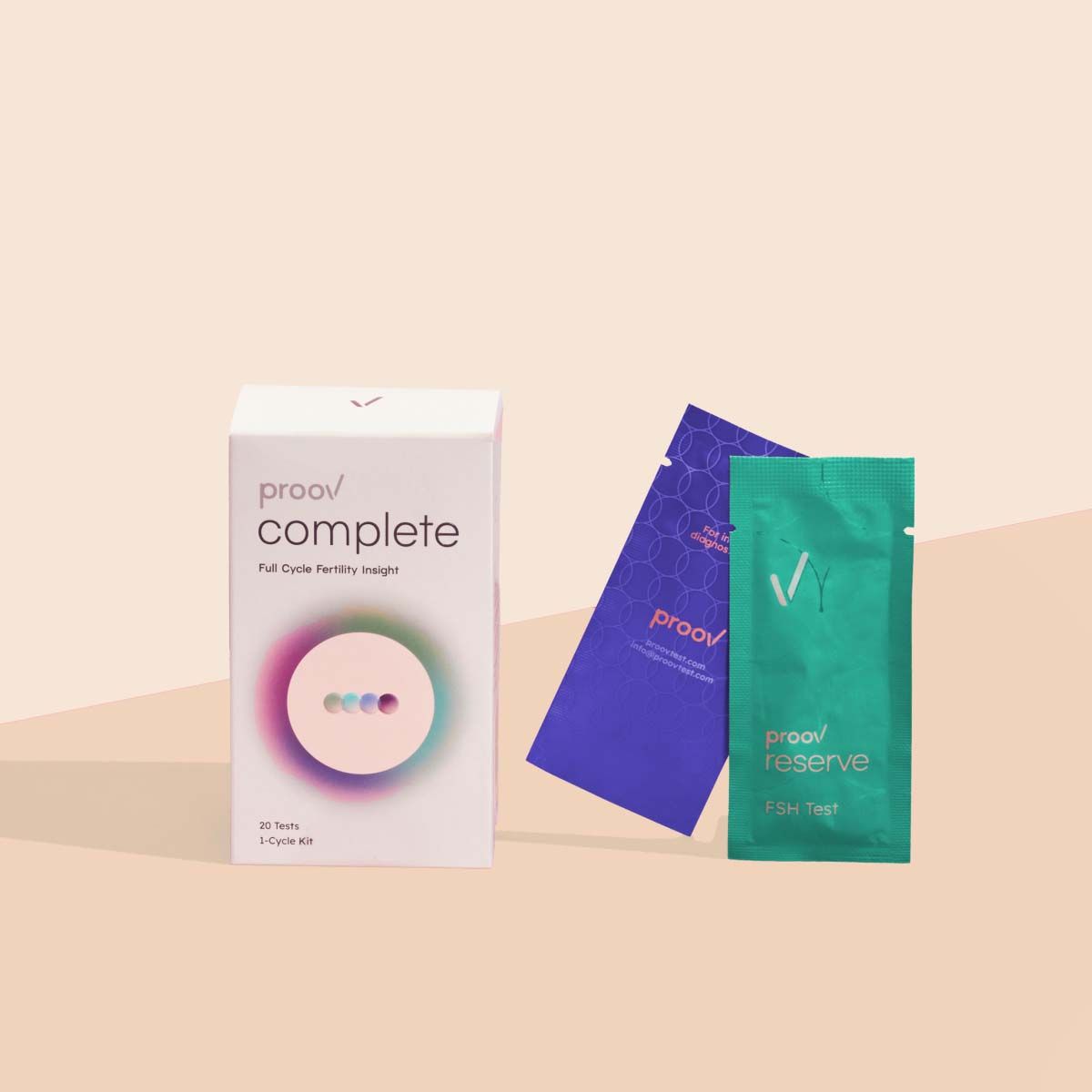
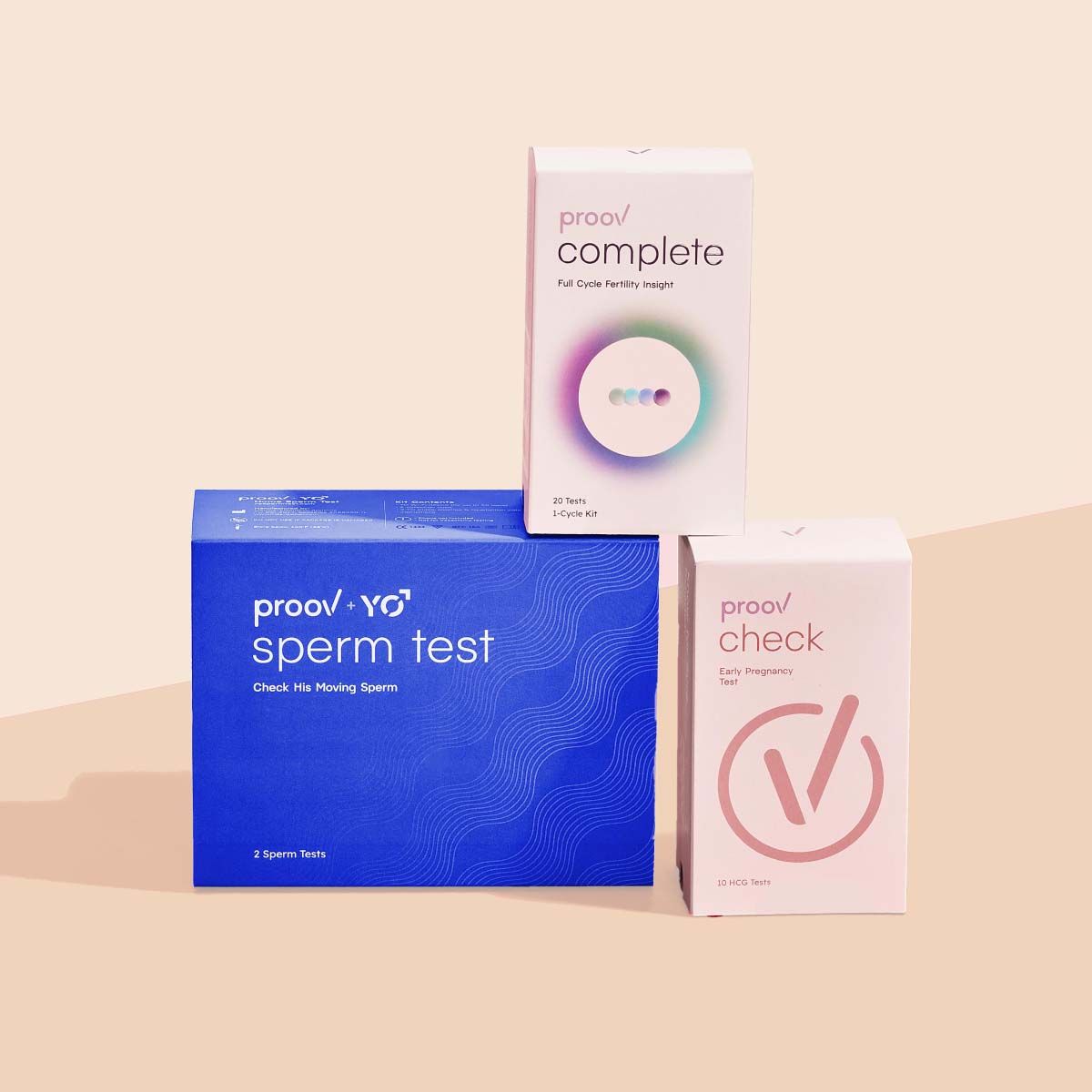
Hers & His Advanced Fertility Kit by Proov
$169.99
The only all-in-one fertility test kit for couples that covers both male and female testing
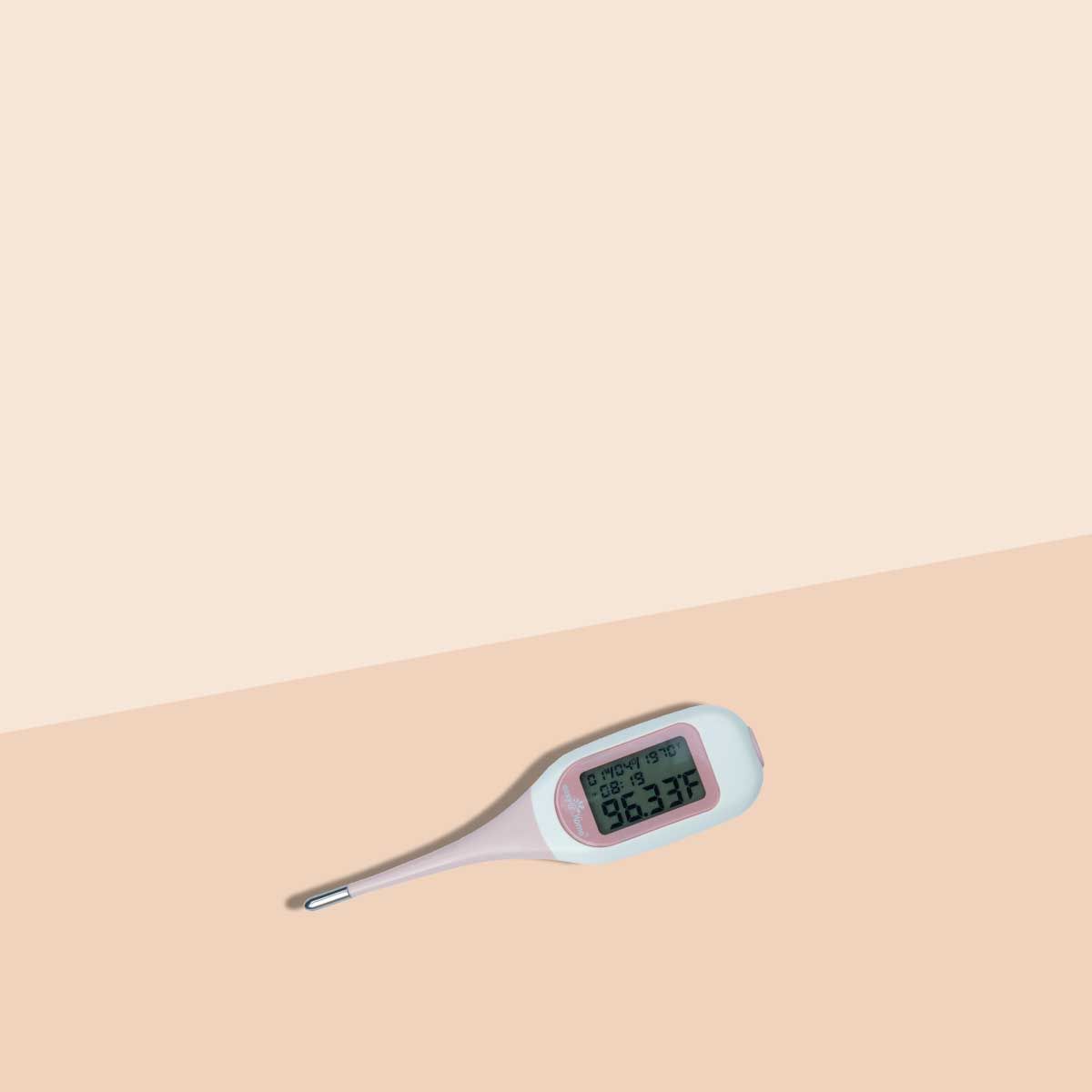
Bluetooth Fertility Thermometer
$39.99
This bluetooth-enabled basal body thermometer makes it easy to find your fertile window.