PrEP Saves Lives — So Why Are So Many
Who Need It Still Going Without?
Published on June 9, 2026
A conversation with Dr. Antonio Urbina, MD, Medical Director of the Institute for Advanced Medicine at the Icahn School of Medicine at Mount Sinai, on the tools we have, the gaps that remain, and what free access to PrEP in New York could mean for the future of HIV prevention.
Featuring Dr. Antonio Urbina, MD, Medical Director of the Institute for Advanced Medicine at the Icahn School of Medicine at Mount Sinai
Real progress has been made in the fight against HIV — but critical gaps remain. The science is powerful, the medications are effective, and the options for prevention are diverse. Yet, in the United States, nearly 40,000 people were diagnosed with HIV in 2023 alone, and someone still dies from an HIV-related cause every minute around the world.
There’s clearly still a problem here to solve—the gap that prevents patients from getting the care they need. That's why Wisp is collaborating with Mount Sinai Health System to make PrEP (pre-exposure prophylaxis, the medication that prevents HIV) more easily affordable and available across New York City and New York State. To understand what's at stake, we sat down with Antonio E. Urbina, MD, Medical Director of the Institute for Advanced Medicine at the Icahn School of Medicine at Mount Sinai. For over two decades, Dr. Urbina has been at the front lines of HIV prevention and care, directing clinical trials, shaping state clinical guidelines, advising the Presidential Advisory Council on HIV/AIDS, and treating patients who often face the greatest barriers to care.
The tools exist. The problem is access.
PrEP* is not a new form of prevention. Oral PrEP, commonly known as Truvada or Descovy, has been available since 2012, and when taken consistently, it reduces the risk of acquiring HIV through sex by up to 99%.
It’s one of the most effective and impactful tools in the fight against HIV, but out of the estimated 1.2 million Americans who could benefit from PrEP, only 36% are currently accessing it. These numbers are even more stark when you break the data down along racial lines: between 2019 and 2022, 94% of eligible white patients were prescribed PrEP versus 13% of eligible Black patients and 24% of Latinx patients.
These statistics are a direct reflection of systemic inequities in who gains access to the best resources to protect and support their health.
It’s not just race — gender plays a role, too.
Women account for one in five new HIV diagnoses in the United States, but are dramatically underrepresented among PrEP users. This blind spot in HIV prevention reveals how care has often centered (white) men who have sex with men, leaving women, and particularly women of color, without the same level of outreach, education, or clinical support.
Dr. Urbina has been working to close this gap at Mount Sinai, spearheading a landmark program that trained OB/GYNs in PrEP prescribing. The two-year initiative was designed to bring PrEP conversations into the clinical settings where women already seek care. It's the kind of systemic approach that Wisp was built for. Our platform is already built to meet people where they are, making it possible to have a conversation about PrEP that might otherwise fall through the cracks.
Cutting-edge prevention: from a daily pill to twice-yearly injections.
While the development of PrEP was a major milestone for HIV care, the science hasn’t stopped. In 2021, the FDA approved long-acting injectable cabotegravir (brand name Apretude), an injection given once every two months for HIV prevention. And in 2025, lenacapavir (brand name Yeztugo*) became the first twice-yearly injectable PrEP, requiring only two injections per year.
The clinical trial results for lenacapavir were historic. Initial results showed zero HIV transmissions among participants. In follow up trials, which included cisgender men and gender-diverse individuals, 99.9% of participants remained protected. Science magazine named it the breakthrough of the year for 2024.
Cost remains a barrier for now—the list price is roughly $28,000 per year—but Gilead Sciences has committed to copay assistance programs for commercially insured patients, and patient assistance programs for uninsured individuals. As state and federal Medicaid guidance catches up, broader coverage is expected.
Formulations mentioned above are not provided by Wisp and require evaluation and prescription from an in-person provider.
Treatment is prevention, too: understanding U=U.
PrEP is the most powerful tool for people who are HIV-negative, but for the millions of people already living with HIV, treatment itself has become a form of prevention through a concept known as U=U — Undetectable Equals Untransmittable.
When a person living with HIV is on consistent antiretroviral therapy and achieves an undetectable viral load, they cannot sexually transmit the virus to their partners. Dr. Urbina points to this as one of the most significant public health breakthroughs of the past decade — not just clinically, but in terms of what it means for the stigma people living with HIV carry every day.
Additionally, states with the highest rates of oral PrEP coverage have already seen the greatest decreases in new HIV diagnoses.
The evidence is clear: scaling up both treatment access and PrEP access works.
What the Wisp x Mount Sinai partnership means for New York
New York State has long been at the leading edge of the fight against HIV with Mount Sinai at the helm, commissioning statewide clinical training programs.
Now, through our collaboration with Mount Sinai, we’re helping to bring that same expertise directly to patients, along with a program to help those in need access free PrEP* across New York City and New York State.
This collaboration is the first fully remote HIV prevention program launched by a New York City medical system—enhancing privacy, convenience, and access to testing that reduces risk of HIV transmission.
"PrEP works best when it fits your life; and now you can start it online, on your own time, at your convenience." said Dr. Urbina
The bottom line is:
- You can’t tell who has HIV by how they look.
- It’s not a life-ending diagnosis.
- It can’t be transmitted through casual contact.
- Anyone who could benefit from PrEP should have access to it — without fear, without judgment, and without a bill they can't afford.
The science is on our side. Let's make sure the access is too.
*PrEP (pre-exposure prophylaxis) is a prescription medication used to help reduce the risk of HIV-1 infection in individuals who are HIV-negative and at high risk. PrEP does not protect against other sexually transmitted infections (STIs) or pregnancy. You must test negative for HIV before starting PrEP and be retested regularly while taking it. PrEP must be taken as prescribed to be effective. Side effects may occur. See site for details.
Wisp is not affiliated and does not sponsor or endorse any company names, logos, or brands shown or mentioned. All product names, logos, brands, and other trademarks or images shown or mentioned are the property of the respective brand owners and are only used to identify the products and services of their respective owners.
Trusted Treatments

Free PrEP*
0Connect with a licensed provider who takes you seriously from the start and access hassle-free HIV prevention.
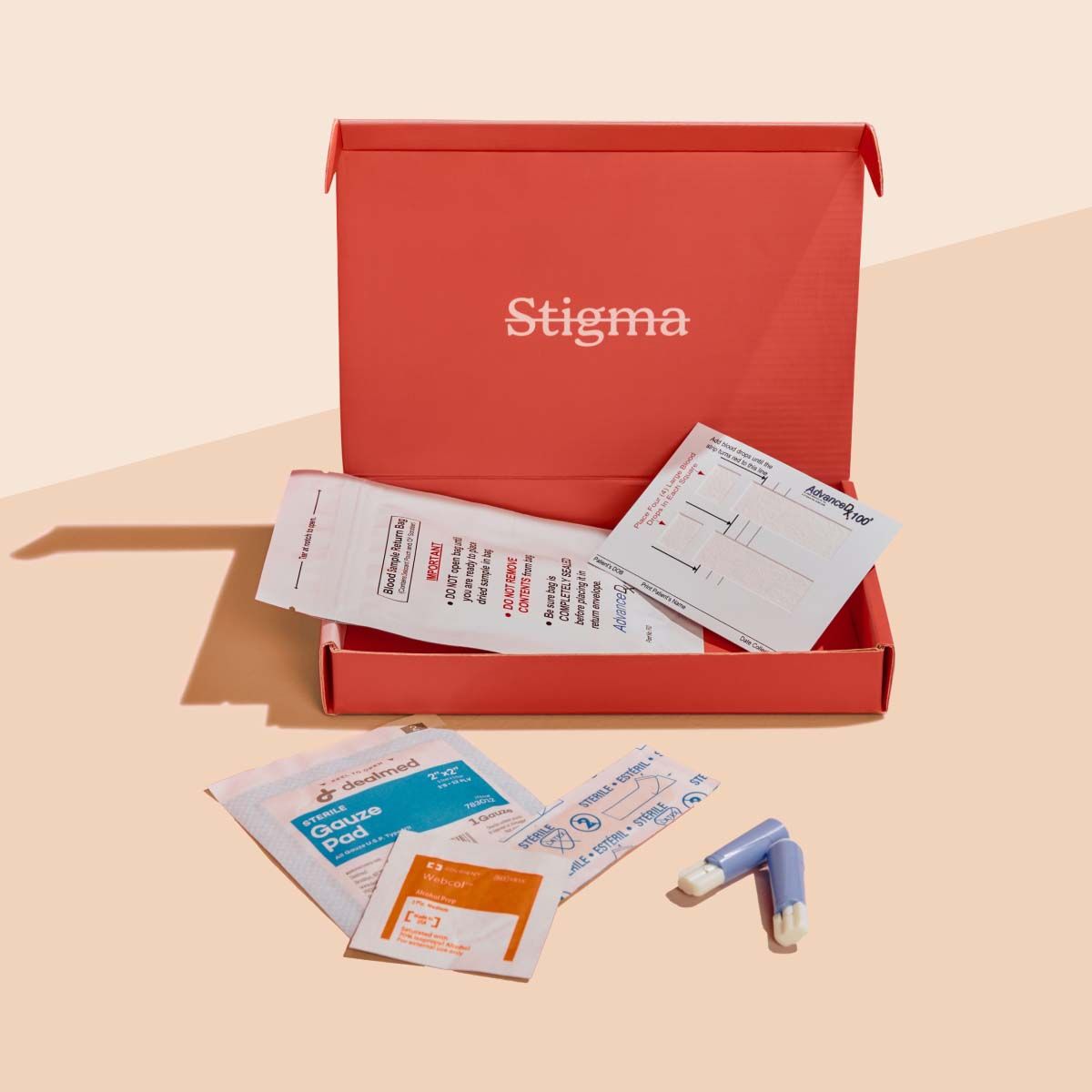
HIV 1 & 2 Blood Test
$99
Screen for HIV with this at-home HIV blood test providing 99.76% to 100% accuracy.