Everything You Need to
Know About Douches
(And Why You Should
Avoid Them)
Published on February 4, 2021
Updated on April 2, 2026
Written by Kathleen Morrison
Medically Reviewed by Dr. Shannon Chatham, DO
Key takeaways
- Is douching safe? The short answer is no. Doctors and gynecologists generally advise against vaginal douching because the vagina is self-cleaning.
- Regular douching can disrupt your natural vaginal flora and pH balance, putting you at risk for bacterial vaginosis (BV), yeast infections, and other vaginal infections.
- Douching has been associated with pregnancy complications and pelvic inflammatory disease (PID).
- Instead of douching, clean your vulva externally with warm water. It is one of the safer ways to clean the area without disrupting healthy bacteria in the vagina.
- If you're dealing with unusual odor or discharge, skip the douche and talk to a healthcare provider for proper diagnosis and treatment.
Throughout human history, women have been sold countless ways to keep their vaginas clean. There’s always some new application of powder, soap, or serum that salesmen “guarantee” keeps the “evil forces” of odor and disease at bay. One of the most enduring home remedies for vaginal odor is douching.
Many women douche because they believe it's a way to clean the vagina, get rid of odor, or feel fresh after their period or sex. But here's the thing: vaginal douching is washing the inside of your vagina by flushing water, vinegar, baking soda, or other mixtures into it. AND doctors overwhelmingly state that douching is not safe for your vaginal health.
The vagina is self-cleaning, and douching actually upsets the delicate balance of healthy bacteria (especially Lactobacillus) that keeps everything running smoothly down there.
When you douche to get rid of odor or discharge, you might feel fresher temporarily, but douching removes the good bacteria your body needs.
Now, let's explore a little more about douches, why it's best to avoid them, and how you can keep your vagina healthy by supporting your body’s natural balance.
What is a douche?
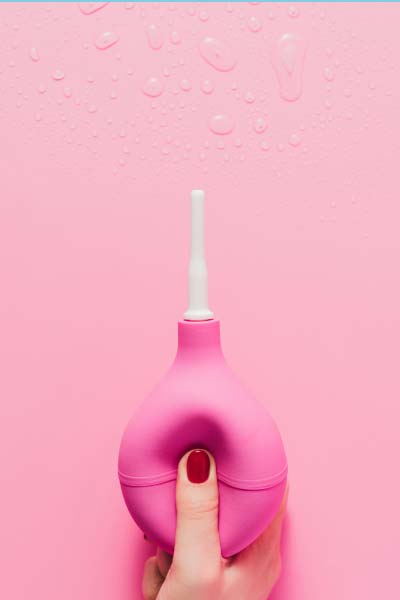
While a douche takes many forms, the basic design includes a water-tight container with an applicator that is inserted into the vagina for flushing. Many douching home remedies exist, but the most common method consists of water and vinegar; additional antiseptics and fragrances are also frequently added.
Whether you buy a pre-made douche or make your own douche at home, the next step is to spray the liquid through the tube into your vagina. Surprisingly, although douching presents a recognized health risk, supermarkets and drugstores still continue to sell many of these products.
Douching vs. washing
Douching products are meant to be used inside the vagina — fluid is inserted into the vagina as a way to “flush it out,” but this method often causes more problems than it solves.
Washing simply involves cleaning the external vulva. So, a better alternative for cleansing down there is to use warm water to clean your vulva or a body wash with gentle ingredients that is formulated for the delicate skin around your vagina.
Luckily for you, Wisp has just what you need — our Balancing Wash is doctor-formulated and specially formulated for your most sensitive skin.
Work it into your shower routine, or use it before and after sex to help wash away harmful bacteria that can disrupt your natural vaginal balance.
What are douches used for?
Even though there is no evidence that douches have any benefits whatsoever, many women douche for the following reasons:
- Trying to prevent pregnancy (though douching does not prevent pregnancy)
- Getting rid of foul vaginal odors
- Cleaning up after sex (douching after sex)
- Rinsing the vagina of menstrual blood or semen
One important thing to remember is that douching actually doesn't help you address any of these symptoms.
Although you may temporarily feel fresher down there, douching can cause matters to get worse by altering the vagina's natural ability to clean itself.
Why doctors advise against douching
So why do healthcare providers recommend that women not douche?
Douching disrupts:
- Your vaginal microbiome, throwing off the balance of good vs. harmful bacteria
- Healthy bacteria (especially Lactobacillus) that keep your vagina acidic and protected
- Your natural pH balance, making your vagina a welcoming environment for infections
This disruption may lead to vaginal infections.
Beyond douching just being ineffective, it can push the bacteria further up into your reproductive system and put women at risk for more serious conditions.
If you're dealing with odor or unusual discharge, that's your body telling you something's off. The answer is to talk to a provider and get the right treatment.
Does douching cause yeast infections?
Douching is very likely to cause yeast infections since it messes with the natural balance of your vagina. A healthy vagina has a balance of bacteria that prevents yeast from overgrowing. When you disrupt this balance, an abundance of yeast can take over. When you have a yeast infection, you may experience the following symptoms:
- An itchy and irritated vagina and vulva
- Burning during sex or urination
- A red, swollen vulva
- Vaginal soreness and pain
- Irregular vaginal discharge (may look thick or like cottage cheese)
Although washing away your irregular vaginal discharge may make sense in theory, douching can continue to make the problem worse. It's best to see a medical professional when you are experiencing yeast infection symptoms. They can accurately diagnose your condition and create a treatment plan that works. When you use the right yeast infection medication, you'll begin feeling relief almost immediately.
What are the other risks of douching?
Along with causing yeast infections, douching is harmful in other ways. It can lead to the following health conditions:
- Pregnancy issues: Douching frequently can lower your chances of getting pregnant. That's not to say this is a safe form of birth control, considering it can lead to other health issues for women. If you were to get pregnant while douching, it could increase your risk of having an ectopic pregnancy, which is when the embryo grows outside of the uterus.
- Pelvic inflammatory disease (PID): This is an infection of your reproductive organs, including your ovaries, uterus and fallopian tubes. Symptoms of PID include pain, abnormal vaginal discharge, abnormal vaginal bleeding, fever and chills, nausea, painful urination and painful intercourse.
- Cervicitis: Like PID, cervicitis is commonly caused by STIs. However, women who douche increase their chances of experiencing both of these health conditions. Cervicitis is inflammation of the cervix. You may experience abnormal vaginal bleeding, vaginal pain, backaches, pelvic pressure and painful intercourse. A limited number of studies have found a link between douching once a week and having an increased risk of cervical cancer.
Is douching with water safe?
If washing your vagina with water is safe, then douching with water-only must be safe too, right? Unfortunately, this is not the case. Even if you remove the vinegar and other additives from your douche mixture, using water can still lead to negative consequences. The main difference is that when you correctly wash your vagina with warm water, you are only rinsing the outside of it. Actually putting the water inside of you can lead to infections and other complications.
What to do instead of douching
Remember that a healthy vagina already has systems in place to clean itself. That's why you may occasionally have light, odorless discharge in your underwear. This is totally normal; it's your body's way to clean the vagina naturally.
When you still feel like you want to freshen up, follow these steps:
- Make a V with your index finger and middle finger to pull back the outside skin of your vagina and spread out your folds.
- Lightly splash warm water onto the area multiple times. You don't need soap to wash it, but if you choose to use some, make sure it is mild and free from heavy perfumes. When using soap, only clean the outside of your folds. Avoid getting any soap on the inside of your vagina.
- Rinse the entire area until all of the soap is gone. Throughout the whole process, be gentle with yourself.
- Use a clean towel to lightly pat yourself dry.
That's really it! Warm water and maybe a gentle wash on the outside is all you need. Avoid douching after sex, after your period, or at any other time. Your vagina's got this.
When should I see a doctor about my vagina?
Home remedies may seem like the smartest first step while experiencing an issue with your vagina, but many of them make matters worse. Whether douching helps or harms your symptoms—spoiler: it harms them—if you are ever experiencing the following symptoms, it's time to pay a visit to your doctor:
- Unpleasant-smelling vaginal discharge
- Abnormal-looking vaginal discharge (unusually thick or watery, yellow or green in color, or more discharge than usual)
- Burning or itching sensations
- Painful intercourse
- Painful urination
Ditch the douche! Your vagina will thank you
Having a healthy vagina is an integral part of living life comfortably. When something feels off, grabbing a douche at the drugstore may feel right, but remember that it can make your symptoms even more intense.
The risks of douching—like BV, yeast infections, PID, and pregnancy complications—far outweigh any perceived benefits.
Take care of your well-being the right way by seeking proper medical advice and avoiding douching altogether. When it's healthy, your vagina is already hardwired to keep itself clean. If you're experiencing symptoms like unusual discharge, odor, or irritation, skip the home remedies and connect with a Wisp healthcare provider who can help you figure out what's going on—and get you feeling like yourself again.
This blog post is for informational and educational purposes only and should not be taken as professional advice. Always consult with a qualified professional before making any decisions based on the information provided here.