Cold Sores vs Herpes:
Is There Really A Difference?
Published on December 31, 2020
Updated on October 19, 2026
Written by Kathleen Morrison
Medically Reviewed by Andrea Sleeth WHNP-BC, MSCP, a healthcare provider affiliated with Wisp
Key takeaways:
- A cold sore is a form of herpes infection, so “cold sores” and “herpes” are not separate conditions. Cold sores typically refer to the visible sores caused by the Herpes Simplex Virus (HSV).
- Cold sores are usually caused by herpes simplex virus type 1 (HSV-1). Herpes simplex virus type 2 (HSV-2) primarily causes genital herpes but can also infect the mouth and cause oral sores.
- Oral herpes and genital herpes are usually named for where the sores appear, not for which strain you carry.
- Both HSV-1 and HSV-2 can spread through skin-to-skin contact, and the virus can be contagious even when your skin looks clear.
- A swab of a fresh sore can help identify which type of HSV is present.
- Prescription antivirals may help shorten an outbreak. For frequent herpes outbreaks, a provider may also consider daily suppressive treatment, which may make outbreaks less frequent for some people.
There's a bump, blister, or sore somewhere on your lip, and you're standing in front of a mirror trying to work out whether it's a cold sore, herpes, or something else entirely.
Most people assume the first two are separate things. They aren't. A cold sore is herpes, a small blister caused by the herpes simplex virus.
While the herpesvirus family includes 8 different strains, the term "herpes" usually refers specifically to infection with herpes simplex virus type 1 (HSV-1) or herpes simplex virus type 2 (HSV-2).
So let's sort out the rest. Below, you'll find what a cold sore actually is, how to tell one from the handful of things that look like it, how a herpes infection is diagnosed, and how to get tested for herpes if you'd rather stop guessing.
These statements have not been evaluated by the Food and Drug Administration. This product is not intended to diagnose, treat, cure, or prevent any disease. Individual results may vary.
Oral herpes vs cold sores: Why the words keep tripping people up
The confusion is mostly linguistic. People hear "herpes" and picture one very specific scenario, when the word describes a whole family of infections caused by the herpes simplex virus.
Cold sores or oral herpes, sometimes called fever blisters, are one form of that herpes infection.
HSV-1 is the strain most often behind cold sores; it may be picked up through sexual and non-sexual contact, such as a relative's enthusiastic kiss in your childhood or a shared utensil.
Once it's in, the virus stays in your body, sitting dormant in nerve cells until something wakes it up. That's why a blister can turn up years after the original exposure, usually with terrible timing.
The better question to ask: Is it a cold sore (oral herpes), or something else?
Since cold sores are herpes, "cold sore vs herpes" doesn't have much of an answer. The useful question is whether that spot is a cold sore at all because several very different things can turn up in roughly the same neighborhood.
What a cold sore is usually like
A cold sore can often start with tingling, itching, burning, or pain before anything is visible.
Within a day or two, small, painful, fluid-filled blisters typically appear in clusters, often along the border of the lip. The area may also look red, swollen, or irritated.
Common symptoms include: Tingling, itching, or burning Pain or tenderness Small, clustered fluid-filled blisters Blisters that break and ooze Crusting or scabbing as they heal
The blisters usually break open, crust over, and gradually heal within two to three weeks.
Cold sores can recur in roughly the same area because the herpes simplex virus remains dormant in nearby nerve cells and can reactivate.
Some people recognize an outbreak by the familiar tingling or burning that comes first.
Cold sore vs canker sore
A cold sore and a canker sore may both hurt, but they’re not the same thing.
Cold sores are caused by the herpes simplex virus (usually HSV-1) and typically appear as small, fluid-filled blisters on or around the lips. They’re also contagious.
Canker sores aren’t caused by herpes and aren’t contagious. They usually appear inside the mouth as round or oval ulcers with a white or yellow center and red border.
These are textbook patterns, not a diagnosis. Cold sores and canker sores can look different from person to person, and other conditions can cause similar-looking sores.
So while appearance can offer clues, testing is what can help confirm whether herpes is actually responsible.
The angry tortilla chip injury and other confusing lookalikes
Not every sore on or around your lip has a virus behind it. Sometimes, the culprit could just be an injury from a sharp tortilla chip.
Other common cold-sore lookalikes may include:
- Biting your lip or other minor injuries
- Picking at dry, peeling skin
- Chapped lips or cracking from cold, dry weather
- Pimples or clogged pores
- Irritation from lip balms, cosmetics, or other products
- Allergic reactions that cause redness, swelling, cracking, or tenderness
These causes generally don’t follow the classic cold-sore pattern of tingling beforehand followed by clustered, fluid-filled blisters.
Genital herpes vs cold sores
The main difference between cold sores and genital herpes is where the sores occur (not which type of herpes simplex virus causes them).
HSV-1 is more common around the mouth, while HSV-2 is more common in the genital area, but either virus can infect either location:
- Oral herpes (cold sores): Sores on or around the lips, and sometimes the nose, cheeks, or chin.
- Genital herpes: Sores on or around the genitals, thighs, or buttocks.
Both can be caused by either HSV-1 or HSV-2 and can spread even when no visible sores are present.
So, calling something a “cold sore” or “genital herpes” is mainly about where the infection is located, not a guarantee of which HSV type is responsible. But the emotional gap people feel between genital herpes vs. cold sores has far more to do with herpes stigma than biology.
Same virus family, wildly different social treatment. Make it make sense.
How can you find out if that sore is actually herpes?
Symptoms and appearance alone aren't a reliable guide. The following two tests can help you find out if the sore you've got is actually herpes:
Swab PCR
A swab PCR test takes a sample directly from an active blister or sore and looks for viral DNA.
When a sore is present, this approach can help confirm an active herpes infection and identify whether HSV-1 or HSV-2 is responsible.
If you'd rather not sit in an in-person waiting room to get that answer, an at-home HSV swab test kit can let you collect the sample yourself and send it to an accredited lab, with a provider consult included so you can talk through your results and prescription options if treatment is appropriate for you.
Blood testing
A serology antibody test looks for HSV antibodies in your blood, so it can work with no active sore, and type-specific serology can help distinguish HSV-1 from HSV-2 antibodies.
The catch is timing and interpretation: antibodies can take weeks to reach detectable levels, and the CDC does not recommend herpes blood testing for most people without symptoms. Blood tests can also return false positives, which is a rough way to spend a Tuesday.
What no HSV test can tell you
Neither test can tell you when you were infected or who infected you, and serology can't show where the virus lives; a positive HSV-1 result doesn't specify oral or genital.
Testing also isn't a diagnosis; a provider still needs to interpret results alongside your symptoms and history.
Prescription treatment options for cold sores and genital herpes
There's no cure for herpes, but prescription antivirals may help treat the outbreak. Whether you're treating cold sores or a genital herpes outbreak, treatment tends to do the most when it starts at the very first tingle, so people who get frequent outbreaks may want a prescription on hand.
A provider can decide what prescription antiviral is most appropriate for you, if medically necessary and appropriate.
Wisp treatment options are available only after consultation with a licensed medical professional, if medically appropriate. You should consult with your healthcare provider before starting a new supplement or treatment regimen. Individual results may vary. Must be 18 or older. For medication details and risks, see the site for details.
Do treatment options differ for cold sores vs herpes?
No. Because cold sores are herpes, the same class of prescription antivirals is used for both oral and genital outbreaks. What may change is the route and treatment plan, at your provider’s discretion.
For genital herpes, oral antivirals are usually the standard option.
For cold sores or fever blisters, your provider may add a topical antiviral cream to an oral medication, if medically appropriate.
If it turns out to be a cold sore, what everyday habits may help?
None of this replaces care from a provider, but a few small things can help make an outbreak easier to live with:
- Sleep and stress. Consistent rest and stress management may help support your immune system generally.
- SPF on your lips. A lip balm with SPF is an easy habit if sun exposure is one of your triggers.
- Cool compresses. These may help ease the pain and swelling during an active outbreak.
- Hands off. Keeping the area clean and resisting the urge to pick can help limit irritation.
- Lysine supplements. Some people reach for lysine-based supplements as part of their daily routine.
These statements have not been evaluated by the Food and Drug Administration. This product is not intended to diagnose, treat, cure, or prevent any disease. Individual results may vary.
Herpes doesn't need a translator, and neither do you
Cold sores vs herpes was never really a comparison. Cold sores are herpes, usually caused by HSV-1, sometimes HSV-2, and the virus behind them is common and manageable with care.
Whether sores show up around your lips or on your genitals, the playbook is the same: learn your triggers, confirm what you're dealing with, and talk to a provider about treatment that fits your life.
Wisp makes both parts easy. You can order an at-home HSV swab test kit with a provider consult included, and if treatment is medically appropriate, get prescription antivirals for cold sores sent to your pharmacy or shipped free in discreet packaging.
Judgment-free, on your terms.
And whatever the test says, keep one thing in perspective. HSV is one of the more common infections on the planet; it doesn't say anything about your character or your choices, and the people worth your time will treat it as the ordinary health detail it is.
A sore on your lip is information, not a verdict.
Most prescriptions are sent to your pharmacy within 3 hours of completing your patient intake form and secure chat or video call when necessary. Pending retail pharmacy hours.
This blog post is for informational and educational purposes only and should not be taken as professional advice. Always consult with a qualified professional before making any decisions based on the information provided here.
Trusted Treatments
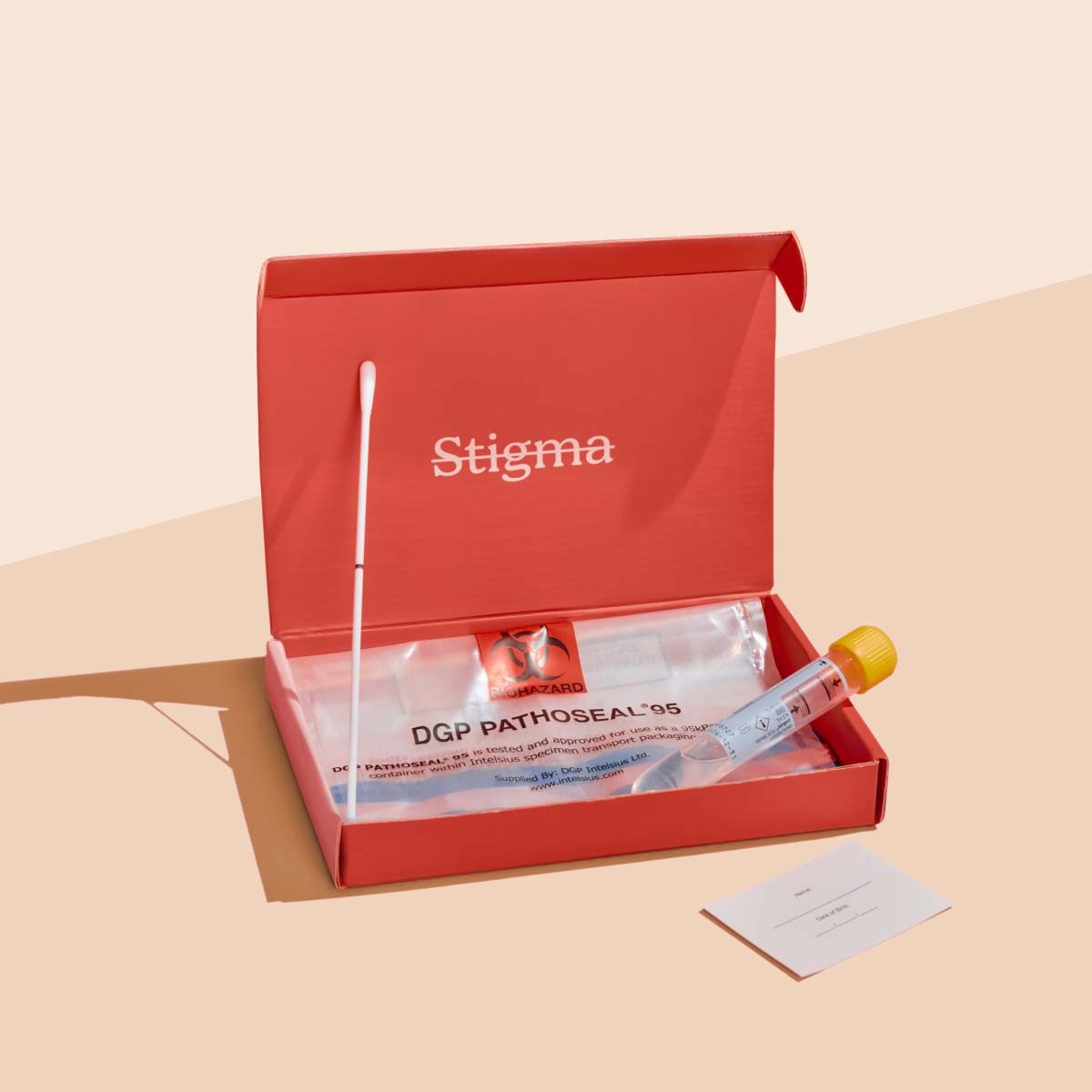
Herpes (HSV) Test
$169
At-home HSV-1 and HSV-2 testing, made simple—swab, ship, and treat. Consult and treatment included if necessary.
Valacyclovir & Acyclovir For HSV-2
Starting at $10/ month
Prescription antiviral pills used to prevent & treat outbreaks

L-Lysine Cold Sores | HSV-1
Starting at $27
L-Lysine is an over-the-counter medication used to manage the severity of oral & genital outbreaks.