Written by Kathleen Morrison
Medically Reviewed by Andrea Sleeth WHNP-BC, MSCP
Key takeaways
- A hormone blood test provides a snapshot of thyroid, reproductive, stress, and metabolic hormones, helping explain changes in mood, energy, or fertility.
- Timing and preparation matter: certain hormones fluctuate across your cycle or day, so follow guidance for accurate results.
- Results give context, not absolutes—reference ranges vary by age, cycle phase, and individual health factors.
- Tracking patterns over time can reveal imbalances linked to conditions like PCOS, thyroid disorders, or adrenal issues.
- Lifestyle factors, diet, and targeted nutrients or supplements can support hormonal balance alongside professional guidance.
Your hormones are basically the group chat that runs your whole body: they keep everything in sync, from your mood and energy to your sleep, sex drive, and cycle. When something feels off (like your energy tanking, your mood swinging for no reason, or your weight shifting without much change from your side), your hormones are often part of the story.
An at home hormone blood test is a super simple way to get answers. It’s just a quick blood draw that checks the levels of key hormones in your body—things like thyroid hormones, reproductive hormones such as estrogen and testosterone, and even stress hormones like cortisol. These results can give you real insight into what’s going on inside your body and why you might not be feeling your best.
Whether you’re curious about your fertility, want to understand your cycle better, or just want to figure out why your energy or mood’s been all over the place, this info helps you take charge.
What is a hormone blood test?
A hormone blood test helps you tune in and figure out what’s really going on in your body, especially when something doesn't feel quite right. It measures the levels of key hormones in your blood at that moment in time, giving you a snapshot of how your body’s balancing everything behind the scenes.
The process is super simple: a small blood sample from your arm gets sent to a lab, and the results help you and your provider understand what your hormones are up to.
Depending on what you’re checking for, your test might include:
- Thyroid hormones like TSH and T4 (linked to energy, mood, and metabolism)
- Reproductive hormones such as estrogen, progesterone, follicle-stimulating hormone (FSH), and lutenizing hormone (LH) (important for cycle health and fertility)
- Stress hormones like cortisol (which influence energy levels and how your body responds to stress)
- Metabolic hormones such as insulin (which helps regulate blood sugar and energy use)
If you’re more of a do-it-from-home kind of person, at-home hormone tests make it easy to check your levels without booking an IRL appointment. You’ll get reliable results and actionable insights that can help you take charge of your health—all on your own schedule.
Do I need a hormone test?
If you’ve been feeling off lately—tired for no reason, moody, breaking out more than usual, or just not feeling like yourself—your hormones might be behind it. These little messengers control so much of how your body feels and functions, so when something’s out of balance, your body finds ways to let you know.
You might want to consider a hormone test if you’re:
- Dealing with irregular or missing periods
- Struggling with fertility or noticing symptoms of PCOS
- Approaching menopause (hello, hot flashes and mood shifts)
- Starting or stopping hormonal birth control and curious about how your body’s adjusting
- Noticing changes in energy, focus, or even your workouts
- Experiencing ongoing anxiety, mood swings, or depression that doesn’t seem to add up
Basically, if your body’s been sending signals that something’s not right, it’s worth listening. Getting your hormone levels checked can help you understand what’s really going on beneath the surface.
How to prepare for your test
Getting ready for a hormone test isn’t complicated, but a little prep can help make sure your results tell the full story. Think of it like setting the stage so your body can speak clearly.
The biggest thing to know? Timing matters. Some hormones shift throughout your cycle, so testing at the right time can make a big difference. If you get regular periods, here’s a quick guide:
- Day 3: Best for testing FSH and estradiol: this gives a snapshot of how your ovaries are working.
- Day 21: Usually when progesterone is checked to confirm if you ovulated.
- Anytime: Thyroid hormones or testosterone can usually be tested whenever, though many providers prefer morning samples when levels are most steady.
You might also be asked to fast before your test, depending on what’s being measured. Reproductive hormones? You’re good to eat normally. But if your panel includes glucose or cholesterol, you’ll likely need to skip food for 8–12 hours before your blood draw (don’t worry, coffee and water still count as prep fuel).
At-home options make it easy to do everything from your couch. You’ll get simple instructions, clear timelines, and results in just a few days — so you can stop wondering what’s up with your body and start understanding it.
What hormones are measured in your blood?
Blood tests can measure a bunch of different hormones, but some show up more often in standard panels. These key players each have a role in keeping your body running smoothly, and understanding what each hormone does can help you make sense of your results and what your body might be telling you.
Follicle-stimulating hormone
FSH is like the coach of your reproductive system, helping eggs develop in your ovaries. Your pituitary gland produces it, and the levels can tell you about ovarian reserve and overall reproductive health.
For most people with cycles, normal FSH ranges from about 4.5 to 21.5 mIU/mL, depending on your age and where you are in your cycle.
Luteinizing hormone
LH teams up with FSH to regulate your cycle and trigger ovulation. Mid-cycle, LH spikes to let your ovary know it’s time to release a mature egg. Typical LH levels sit between 1.68–-15 mIU/mL but jump to 21.9–56.6 mIU/mL during ovulation.
Folks with PCOS often see elevated LH compared to FSH, which can throw off ovulation patterns.
Thyroid-stimulating hormone
TSH is basically your metabolism’s guide, it tells your thyroid how much hormone to produce. Normal levels are usually 0.27 to 4.2 mIU/L.
High TSH? Your thyroid might be slacking (hypothyroidism).
Low TSH? Your thyroid could be overachieving (hyperthyroidism), which can make your heart race and your weight shift.
Testosterone
Testosterone isn’t just a “male hormone”; it plays key roles for women too, supporting muscle mass, bones, and yes... Libido. Healthy ranges for women are usually below 40 ng/dL.
Higher-than-normal testosterone can show up in PCOS or other hormonal imbalances and sometimes shows as excess hair growth or acne.
Estradiol
Estradiol is your main estrogen during reproductive years and touches everything from periods to mood. Levels move throughout your cycle, typically from 30 to 400 pg/mL.
Low estradiol can show up as irregular periods, hot flashes, or dryness down there, giving you clues about what might be going on hormonally.
How to read your test results
Think of your lab report as a snapshot of your body’s chemistry at that moment... It shows your number, the reference range, and sometimes a little flag if something is outside the typical range. Those reference ranges cover where most people fall, but being “in range” doesn’t automatically mean you feel amazing, and being slightly outside doesn’t always signal a problem.
Context is everything. A testosterone level that’s normal for someone in their 50s might be totally different for someone in their 20s. Your age, symptoms, medications, and where you are in your cycle all shape how your results are interpreted.
Many at-home and lab-based tests give easy-to-read breakdowns of your numbers and what they mean. The best way to get the full picture? Repeat the tests and track your results over time. That way, you can spot patterns, see how lifestyle or treatment changes impact your hormones, and have a smarter conversation with your healthcare provider.
What can the test actually show you?
Hormone blood tests are like your body giving you a sneak peek behind the curtain. They can show patterns and imbalances that might explain symptoms you’ve been noticing, from fertility frustrations to energy dips or mood swings.
Polycystic ovarian syndrome
PCOS is super common—it affects between 6 and 13% of women of reproductive age—and a blood test can give you a clear picture.
Typical signs in testing include higher testosterone and LH levels, sometimes with an unusual LH to FSH ratio. At-home and lab-based panels make screening convenient and easy to fit into your life if you suspect that something's up.
Thyroid function imbalance
Your thyroid is a tiny gland with a big job. Testing TSH along with free T3 and T4 helps you see if it’s keeping up with your body’s demands.
These tests can flag things like an underactive or overactive thyroid gland, or autoimmune conditions like Hashimoto’s, giving you clarity on changes in energy, weight, or mood.
Adrenal gland disorders
Your adrenal glands are your body’s stress responders, and testing cortisol and other hormones related to stress response shows how well they’re doing their thing.
Patterns in your results can hint at conditions like Addison’s or Cushing’s, helping you and your provider figure out what’s going on with your stress response, metabolism, and overall balance.
Take charge of your hormones and your life
Getting the scoop on your hormones is basically like unlocking your body’s cheat codes. A hormone blood test gives you the lowdown on the chemical messengers running the show: from your energy and mood to your reproductive health.
Whether you’re trying to figure out mysterious symptoms, planning for a baby, or just curious about how your body ticks, these tests can give you answers that actually matter.
The best part? Modern hormone testing is super accessible. You don’t have to sit around guessing or toughing it out. From full lab panels to at-home kits like Wisp’s, there’s an option that fits anyone's comfort zone and lifestyle. Once you know your numbers, you can chat with a healthcare provider and make decisions that target what’s really going on, instead of just covering up symptoms.
Ready to see what’s happening under the surface? Check out Wisp’s at-home hormone testing kits and take the first step toward understanding your body—it’s easier than you think.
Iron Support
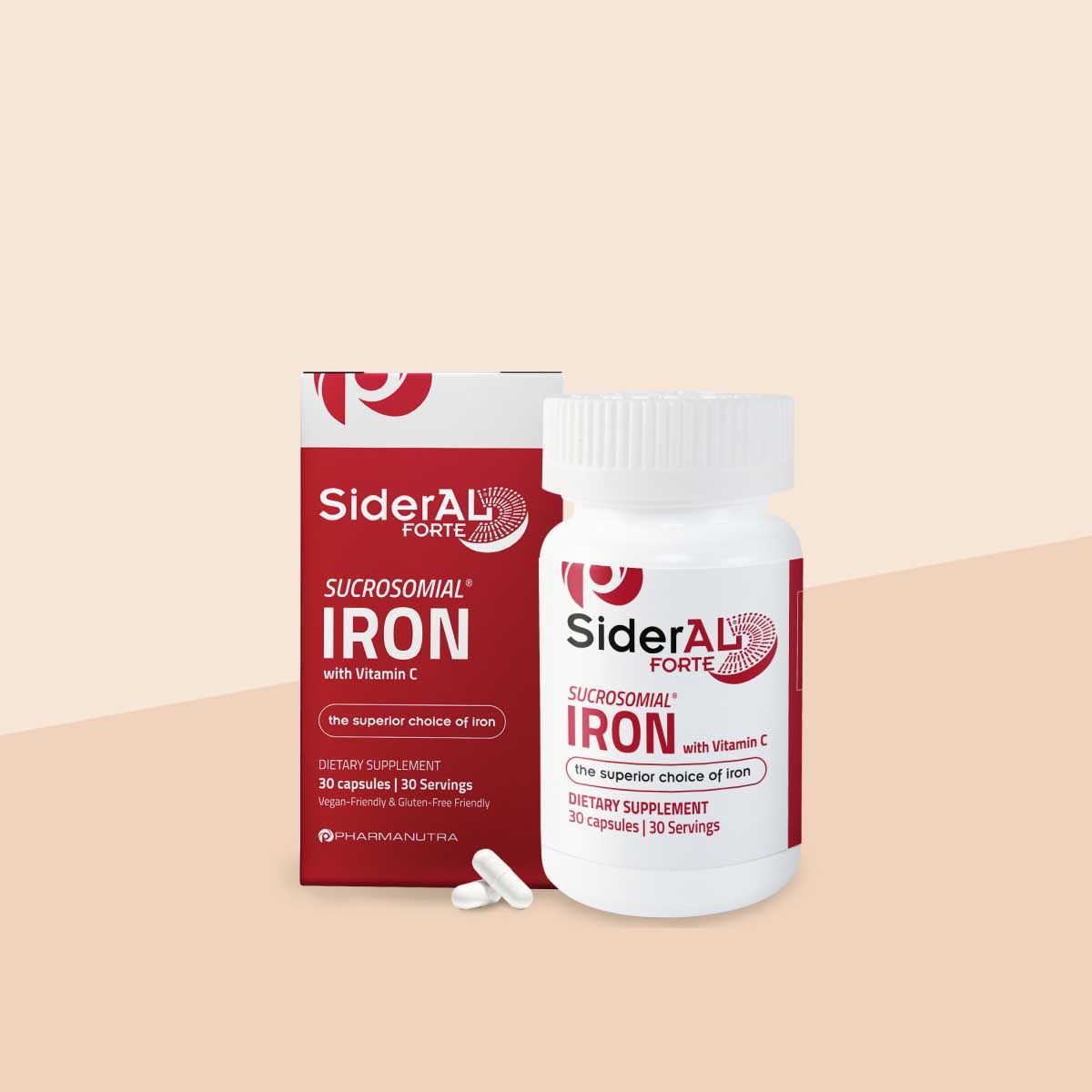
SiderAL® Forte Iron Supplement
Starting at $80/ month
Support healthy iron levels with patented Sucrosomial Iron.