Written by Kathleen Morrison
Medically Reviewed by Andrea Sleeth WHNP-BC, MSCP
Key takeaways
- Shifts in estrogen during perimenopause and menopause can affect joint comfort, cartilage health, and inflammatory response.
- Supplements like hydrolyzed bovine collagen, omega-3s, vitamin D, magnesium, glucosamine/chondroitin, turmeric/curcumin, boswellia, vitamin C, calcium, and vitamin K2 may help support joint health when used consistently.
- Dosing, quality, and timing all matter, and some supplements interact with medications, so it's worth a quick check-in with a provider.
- Lifestyle changes like strength training, a healthy weight, quality sleep, and an anti-inflammatory diet can likely enhance the benefits of supplements.
- If menopause-related joint pain interferes with daily life or isn't improving, consider speaking with a healthcare provider to explore prescription treatment options, if appropriate. Prescription options can help address the underlying hormonal changes contributing to joint pain, while supplements can provide additional support as part of a comprehensive care plan.
Aching knees. Stiff fingers when you wake up. That creaky feeling you swear wasn't there a year ago.
Menopause is a natural transition, but that doesn't mean you just have to grin and bear every single symptom that comes with it.
Many women experience joint aches and pains as estrogen levels shift during perimenopause and menopause, and the link between menopause and joint discomfort is more direct than most people realize.
The good news: there are supplements for menopause joint pain that can help ease stiffness and support your overall joint health. And when paired with the right lifestyle tweaks, they can help make a real difference in your overall quality of life.
Why joint pain increases in menopause
Estrogen helps maintain the health of joint cartilage, keeps inflammation in check, and supports the synovial fluid that lubricates your joints.
When estrogen declines during the menopausal transition, cartilage can lose water content and become less resilient, which can cause pain and stiffness. That grinding sensation in your knees or the joint pain and stiffness in your hands? That's not you getting old; that's your hormones asking for attention.
Many women also notice that menopause symptoms like poor sleep and weight gain contribute to joint issues. Poor sleep increases inflammatory markers, and excess weight puts added mechanical pressure on your joints.
It's a frustrating cycle, and it's way more common than anyone talks about (you're not alone in this, promise).
And, while hormone replacement therapy (HRT) is one treatment option, if eligible, many women explore with their providers, supplements for menopause can also play a meaningful supporting role to help manage symptoms.
Wisp treatment options are available only after consultation with a licensed medical professional, if medically appropriate. You should consult with your healthcare provider before starting a new supplement or treatment regimen. Individual results may vary. For medication details and risks, see site for details.
10 supplements that can help with menopause joint support
Not every supplement on the shelf is worth your money. The ones below have been evaluated in human clinical research and may support joint function, comfort, and mobility when used consistently.
A heads-up: supplements are not a substitute for medical treatment, and your experience will vary based on your health, medications, and lifestyle.
Always chat with a provider before starting something new.
With that, let's break down what supplements can help offer joint health support:
1. Hydrolyzed bovine collagen
Collagen is the most abundant structural protein in your body, and your natural production slows down significantly during and after menopause, which can likely contribute to joint aches and pains, skin changes, and loss of cartilage cushioning.
Based on current nutritional research regarding collagen supplementation, hydrolyzed bovine collagen is highly bioavailable, meaning your body absorbs it more efficiently.
It is broken down into smaller pieces that your body can absorb more easily, and it helps support joint comfort, especially in adults over 50.
Dosing:
- Typical studied doses range from 10–15 g/day for hydrolyzed collagen peptides
Safety considerations:
- Generally well tolerated; mild gastrointestinal symptoms (fullness, mild nausea) have been occasionally reported
- Check with your provider if you have known food allergies
2. Omega-3 fatty acids (EPA/DHA)
Omega-3s, specifically EPA and DHA from fish oil, may support joint health by helping maintain a healthy inflammatory response.
Several clinical trials in adults have found that omega-3 supplementation may help ease morning stiffness, joint pain, and muscle discomfort.
Dosing:
- Studied doses for joint-related support: 1,000–3,000 mg combined EPA + DHA daily (check the label; total fish oil mg ≠ EPA/DHA mg)
- Take with food to help reduce the chance of a fishy aftertaste
Safety considerations:
- Mild GI effects (fishy burps, loose stools) at higher doses
- Potential mild blood-thinning effect. If you take blood thinners (e.g., warfarin, aspirin), talk to your provider before adding high-dose omega-3s
3. Vitamin D
Here's one menopausal woman can't afford to skip: vitamin D plays a key role in bone health, muscle function, and immune support.
Because bone loss can accelerate after menopause, and the risk of osteoporosis increases with age, maintaining adequate vitamin D is especially relevant for postmenopausal women.
Many guidelines also recommend starting bone density screenings around age 60, making it a good time to check in on your bone health and make sure you're getting the support your body needs.
Dosing:
- RDA for women ages 51–70: 600 IU (15 mcg)/day
- Many adults with documented deficiency may need 1,000–2,000 IU or more under provider supervision. Testing is the best way to know where you stand
Safety considerations:
- Fat-soluble, so it builds up over time; avoid megadosing without testing
4. Calcium
Calcium helps maintain the health of your bones and protects joint-supporting structures from bone loss. During and after menopause, declining estrogen speeds up bone loss, making calcium intake especially important.
Getting adequate calcium through food (dairy, leafy greens, fortified options) is ideal, but supplementation can also fill gaps.
Dosing:
- Women ages 51+ should take about 1,200 mg/day from all sources combined (food + supplement)
- Split doses across the day for better absorption
- Calcium carbonate should be taken with food; calcium citrate can be taken anytime
Safety considerations:
- High supplemental doses may interact with certain antibiotics and medications for thyroid and other conditions.
5. Vitamin K2
Vitamin K2 works alongside vitamin D3 and calcium to help direct calcium to bones, rather than allowing it to accumulate in soft tissue.
It may also help maintain joint flexibility and is often paired with vitamin D3 and calcium in supplement form.
Dosing:
- Common amounts studied range between 90–180 mcg/day of MK-7 form
Safety considerations:
- If you're on blood-thinning medications like warfarin, check with your provider; Vitamin K can directly affect clotting pathways
6. Magnesium
Magnesium is involved in hundreds of enzymatic reactions, including those that support bone formation and muscle relaxation.
Adequate magnesium may also help maintain healthy vitamin D metabolism. Many women experience joint pain and muscle tension together, and if you're waking up with tight muscles or night sweats that disrupt your sleep, magnesium is worth considering for overall support.
Dosing:
- Women ages 51+: 320 mg/day from all sources
- Magnesium glycinate or malate forms are generally gentler on the stomach
Safety considerations:
- High doses may cause loose stools or diarrhea; start low and increase gradually
- Can potentially interfere with the absorption of some antibiotics and bisphosphonates when taken at the same time
7. Glucosamine and chondroitin
These two naturally occurring compounds are found in cartilage and are among the most studied supplements for joint health.
Some research suggests they may help with knee joint pain and stiffness in adults, particularly those with moderate joint issues.
Dosing:
- Common studied doses are 1,500 mg/day for glucosamine sulfate and 1,200 mg/day for chondroitin sulfate.
Safety considerations:
- Generally well tolerated
- If you have a shellfish allergy, look for non-shellfish–derived glucosamine or a vegetarian version
8. Turmeric/curcumin
Curcumin, the active compound in turmeric, may support joint health by helping maintain a healthy inflammatory response.
Not only that, but it can also help support overall musculoskeletal health, which just means how well your bones, joints, and muscles work together to keep you moving without pain or stiffness.
The tricky part is that curcumin is poorly absorbed on its own.
So, look for formulations with piperine (black pepper extract) or enhanced bioavailability technology.
Dosing:
- 500–2,000 mg/day of curcumin, depending on formulation
- Taking it with a fat-containing meal improves absorption
Safety considerations:
- May have a mild blood-thinning effect
- High doses may cause GI upset; use caution if you have gallbladder issues
9. Boswellia
Boswellia (Indian frankincense) contains boswellic acids that may help support a healthy inflammatory response in joint tissue.
It's often combined with curcumin in joint-support formulas, and several human trials in adults with knee discomfort have found it can help improve joint function.
Dosing:
- 100–400 mg/day of boswellia extract (standardized for AKBA)
Safety considerations:
- Generally well tolerated; mild GI effects have been noted in some studies
- Not well studied in combination with immunosuppressants; check with your provider
10. Vitamin C
Vitamin C is essential for collagen synthesis. Your body uses it to form and help maintain flexibility and reduce cartilage breakdown. It also acts as an antioxidant that may help manage oxidative stress in joint tissues.
Dosing:
- 75 mg/day is the RDA for women; the upper limit from supplements is 2,000 mg/day
- Getting vitamin C from food alongside collagen supplementation may also help improve results
Safety considerations:
- High doses (above 1,000–2,000 mg/day from supplements) may cause GI upset or increase the risk of kidney stones in susceptible individuals
These statements have not been evaluated by the Food and Drug Administration. This product is not intended to diagnose, treat, cure, or prevent any disease. Individual results may vary.
Can diet and lifestyle enhance supplements for menopause joint support benefits?
Supplements work way better as part of a bigger picture. What you do day to day matters as much as what's in your pill organizer:
- Move your body: Low-impact movement like walking, swimming, yoga, and strength training may help maintain flexibility and minimize the risk of pressure on your joints. Strong muscles take pressure off achy knees and hips.
- Maintain a healthy weight: Excess weight adds mechanical stress to weight-bearing joints. Even modest changes can ease that load.
- Eat anti-inflammatory: Mediterranean-style eating, fish, olive oil, nuts, leafy greens, and colorful veggies may help support a healthy inflammatory response.
- Sleep like it's your job: Deep sleep is when your body does its repair work. If hot flashes or night sweats are wrecking your rest, that's worth addressing.
- Try heat or cold: Heat can help loosen tight muscles, and cold can ease swelling. Use whatever works for you.
When to consider supplements for menopause joint health management
If you need extra support for your joints during menopause, that's a reasonable time to think about supplements that may help.
Most need consistent use for a couple of weeks before you'd expect to notice anything, so patience is part of the deal.
Long-term effectiveness varies a lot from person to person. Supplements that contain well-studied ingredients like hydrolyzed collagen, omega-3s, and curcumin tend to have the most research behind them.
That said, if your pain is severe (to the point that it’s impacting quality of life), sudden, only on one side, or comes with swelling or redness, please skip the supplement aisle and call a healthcare provider. Those signs can point to other issues that need evaluation.
Your joints deserve support, too
Menopause and joint pain often show up together, and understanding the link between menopause and estrogen is the first step toward doing something about it.
From hydrolyzed bovine collagen to omega-3s to vitamin D, supplements can help support your body's structural health over time.
Wisp Revive Collagen Tablets are a great starting point if you’re looking for a supplement to support your menopause journey and overall joint health.
It's formulated with bovine collagen and is designed to support joint and connective tissue health from the inside out.
And if you want a more comprehensive plan? Wisp's online menopause consults connect you with real providers who can help you figure out what your body actually needs during and after menopause.
This blog post is for informational and educational purposes only and should not be taken as professional advice. Always consult with a qualified professional before making any decisions based on the information provided here.
Menopause Support

Menopause Consult Online
$99
Customized care for menopause & perimenopause symptoms including estrogen & progesterone hormone replacement.
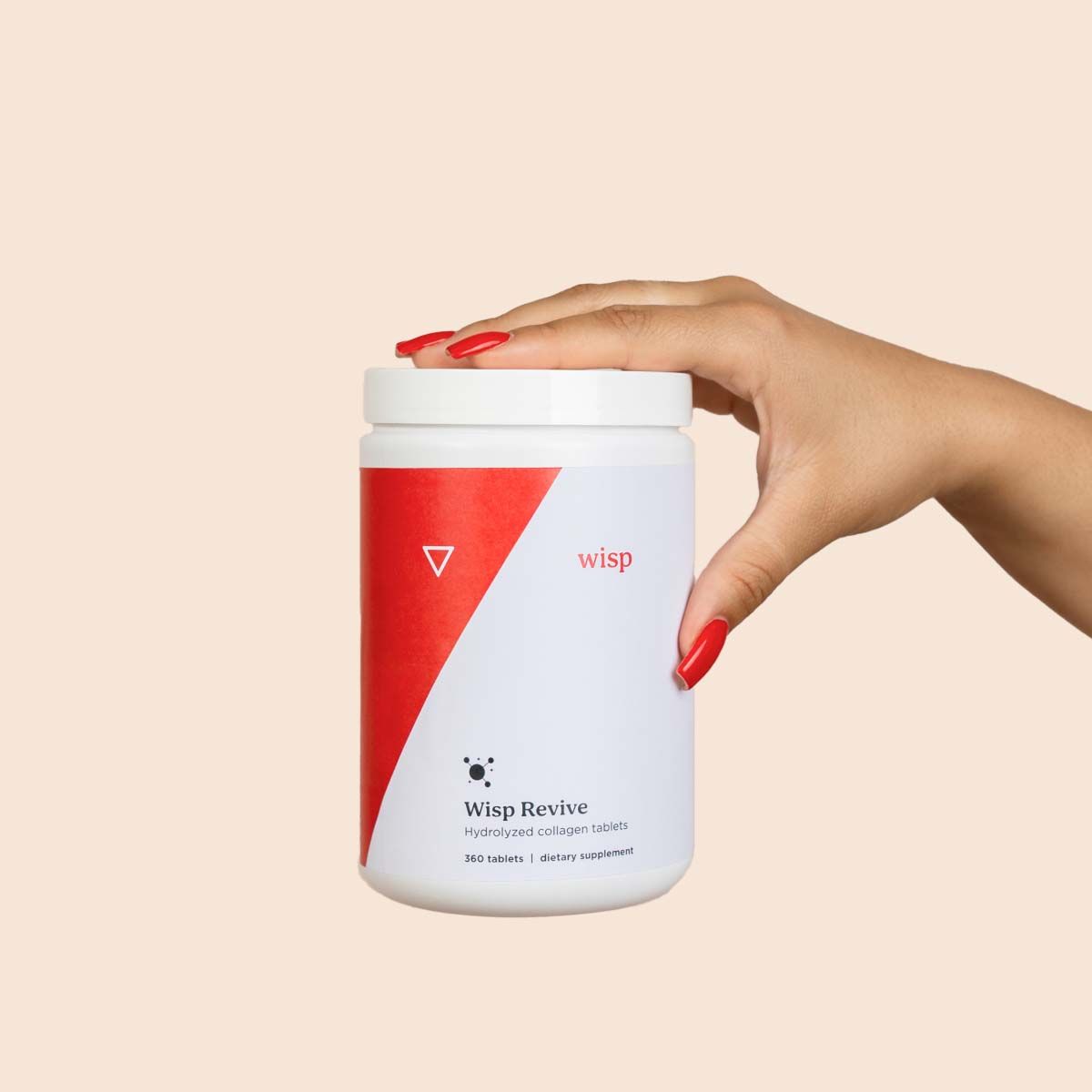
Wisp Revive Collagen Tablets
Starting at $22/ month
Support healthy hair, skin, and nails with hydrolyzed collagen.